
Dog Deworming Schedule in India — Puppy to Adult Chart, Symptoms & Safe Dosing (2026)
Just got a puppy and not sure when to deworm it? This simple 2026 guide gives you the full deworming schedule for India — from puppy to adult — plus the signs of worms to watch for, how to give the medicine safely, and why even indoor dogs need it.
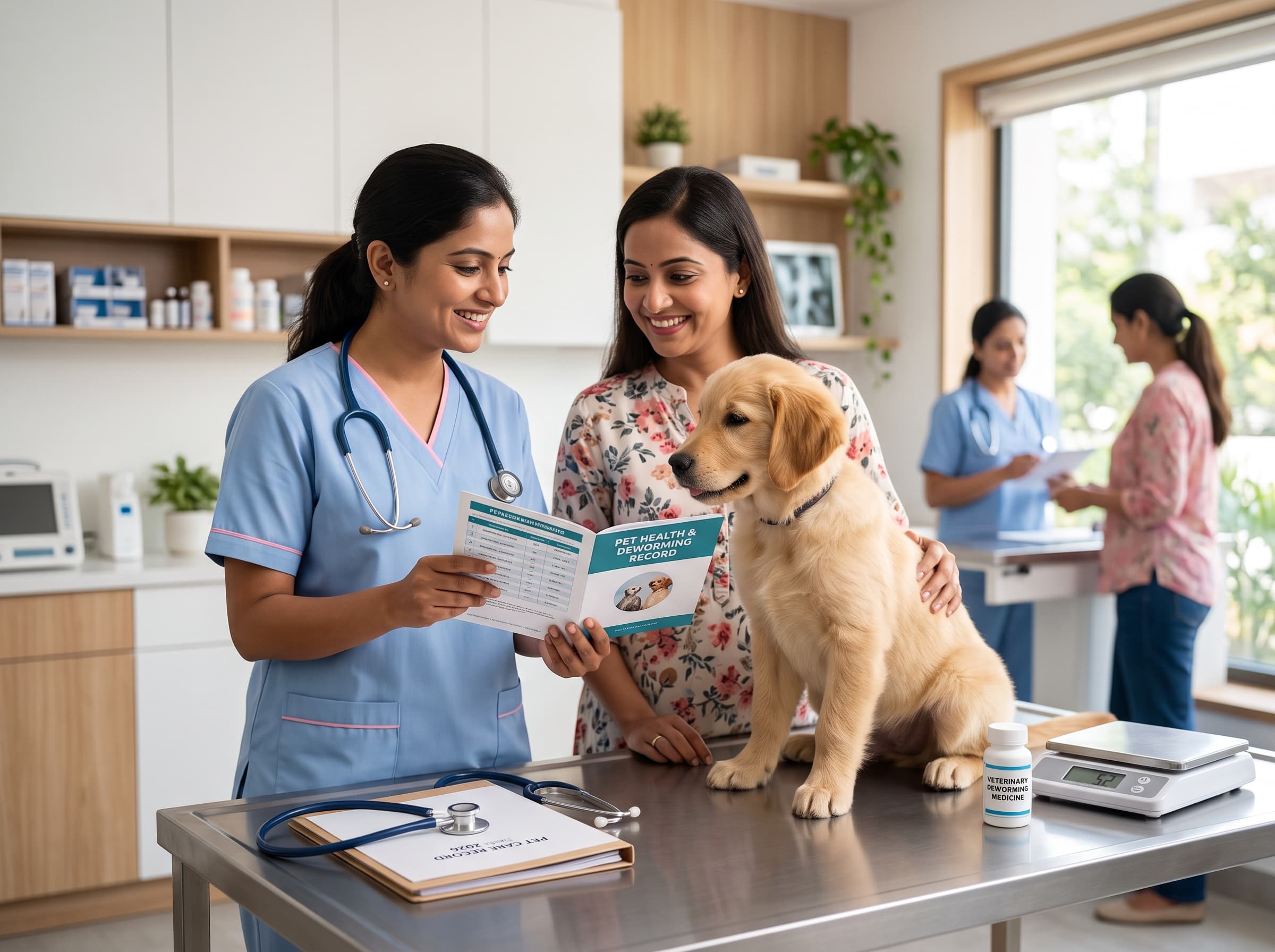
Dog Deworming Schedule in India — Puppy to Adult Chart, Symptoms & Safe Dosing (2026)
If you've just got a puppy, here's something no one tells you early enough: dogs get worms. A lot.
It usually goes like this. You bring home a happy little puppy. A couple of weeks later, his tummy looks a bit swollen and his potty goes soft. You take him to the vet, and the first thing they ask is, "Has he been dewormed?" — and you have no idea what that means.
Totally normal. Most new pet parents don't.
Deworming just means giving your dog a simple medicine that clears out worms from their stomach. And in India, it matters a lot. Our weather is warm and humid almost all year, which is perfect for worms. Dogs pick them up from soil, dirty water, fleas, other dogs, and even from their mother as newborns.
The good news? It's cheap, easy, and it stops most worm problems before they even start. Here's exactly when and how to do it.
The Schedule — Just Follow This Chart
If you remember only one thing, remember this. It's the routine most Indian vets follow:
| Age | How Often | Notes |
|---|---|---|
| 2 – 12 weeks | Every 2 weeks | Start the first one at 2 weeks old |
| 3 – 6 months | Once a month | Keep going every month |
| 6 months and older | Every 3 months | For the rest of their life |
If your dog is a rescued street dog, eats raw food, or roams around a lot, they may need it more often. Ask your vet — don't guess.
Why Dogs in India Need It So Often
Simple: our climate.
In cold countries, worms slow down in winter. In India, it's warm and humid most of the year, so worms are active all the time. On top of that, your dog runs into them everywhere:
- Soil and puddles on daily walks
- Street dogs they sniff and play with
- Fleas, which carry worms
- Their own mother, if they were born with them
And here's the part people get wrong — even indoor dogs need deworming. Worm eggs come into your home on your shoes, on soil, and on food. Living in a flat doesn't keep your dog safe.
So in India, deworming isn't a "maybe." It's a basic part of caring for a dog.
The Different Kinds of Worms
There isn't just one type of worm, and that's why you can't just grab any medicine off a shelf. Here are the common ones:
- Roundworms — the most common in puppies. Look like little strings of noodles. Often passed from the mother.
- Hookworms — attach inside the gut and can make a dog weak, especially young puppies.
- Whipworms — cause weight loss and loose potty.
- Tapeworms — usually come from fleas. You might spot small rice-like bits near your dog's bottom.
- Heartworms — spread by mosquito bites, and these are serious. Prevented in a different way, so leave this one to your vet.
Different worms need different medicines. That's why the vet's advice matters.
Signs Your Dog Might Have Worms
A lot of dogs show no signs at all — which is exactly why you deworm on a schedule instead of waiting for symptoms. But if something's off, look for:
- Worms or small rice-like bits in the potty or near the bottom
- A round, swollen tummy (especially in puppies)
- Dragging or "scooting" their bottom on the floor
- Losing weight even though they're eating fine
- A dull, rough coat
- Loose potty or throwing up
- Low energy, seeming tired
Some things mean go to the vet right away, not treat at home: blood in the potty, pale gums, or a puppy with a swollen belly who is weak and not eating. In young puppies, a lot of worms can be dangerous fast. Don't wait on those.
How to Give the Medicine
Deworming medicine is usually a tablet or a syrup you give by mouth. The dose depends on your dog's weight — so this part really matters. Too little won't work, and too much can hurt them. Weigh your dog, and let your vet confirm the amount.
A few things that make it easier:
- Give it with food or right after. This is gentler on the stomach.
- Morning is best. Your dog is fresh, and you can keep an eye on them all day.
- Hide the tablet in a bit of food or a treat, or gently place it at the back of the tongue.
- Always weigh first. Guessing the weight means guessing the dose.
One important thing: there are different types of dewormers, and the right one depends on your dog's age, weight, and the kind of worm. Let your vet choose the product and the dose. Please don't just pick a brand yourself — and never give your dog a dewormer made for humans. It's not safe for them.
What Happens After
Most dogs are totally fine. A couple of normal things you might see:
- Worms coming out in the potty for a day or two — that's the medicine working, not a problem
- A little tiredness or slightly loose potty for a day
Call the vet if your dog keeps throwing up, seems really unwell, or if you saw a lot of worms. Sometimes one dose isn't enough to clear everything, and the vet may suggest a second dose or a quick check-up.
When You Must Ask the Vet First
Some situations need the vet's go-ahead before you do anything:
- Pregnant or feeding mother dogs. Deworming protects the puppies, but the wrong medicine at the wrong time can harm them. This one is fully vet-guided.
- Very young, very small, or sick puppies. They need specific medicines and careful dosing.
- A lot of worms, or worms that keep coming back. The vet may do a simple potty test to find the exact worm and treat it properly.
Deworming Alone Isn't Enough — Keep Them from Coming Back
The medicine clears the worms your dog has now. These simple habits stop new ones:
- Control fleas. Fleas carry worms, so keeping fleas away helps a lot.
- Clean up potty quickly and keep your dog's space clean.
- Wash their bed and bowls often.
- Treat all your pets together. Worms spread between animals, so deworm everyone on schedule.
- Do a yearly potty test at the vet, especially for dogs that go outside a lot. Worms can hide even in a healthy-looking dog.
And about the cost — dewormers are genuinely cheap. It's a small amount per dose depending on your dog's weight and the brand. Compared to treating a bad worm problem later, it's one of the best-value things you can do for your dog. (Prices vary, so check with a local vet or store.)
How wagNbush Helps
Deworming is easy once you have a vet who knows your dog — someone who can tell you the right medicine, the right dose, and the right timing.
With wagNbush, you can:
- Find trusted vets and pet health services in your city
- Get real advice instead of guessing at a pet shop
- Keep all your dog's care — deworming, vaccinations, checkups — in one place
👉 Explore pet services in Bengaluru
👉 Explore pet services in Delhi NCR
Frequently Asked Questions
When should I deworm my puppy in India?
Every 2 weeks from 2 weeks old until 12 weeks. Then once a month until 6 months. After that, every 3 months for life. Your vet may change this for a higher-risk dog.
How often should I deworm my adult dog?
Every 3 months for most dogs. Dogs that roam or mix with street dogs a lot may need it more often — ask your vet.
Do indoor dogs really need deworming?
Yes. Worm eggs come in on your shoes, on soil, and on food. Even a dog that rarely goes out needs a regular schedule.
Are there any side effects?
Usually small ones — slightly loose potty, a bit of tiredness, or worms passed for a day. If your dog keeps vomiting or seems really unwell, that's not normal — see a vet.
Can I give my dog a human dewormer?
No. Human dewormers aren't made or measured for dogs and can be unsafe. Always use a dog dewormer at the right weight-based dose, guided by your vet.
Can I deworm my pregnant dog?
Only with a vet-approved medicine and timing. It protects the puppies, but some medicines are unsafe during pregnancy — so this is fully up to the vet.
Final Thought
Deworming isn't exciting, but it's one of those quiet little habits that keeps your dog healthy and happy — and it protects your family too, since some worms can spread to people.
Set the schedule, stick to it, and let your vet pick the right medicine and dose. Do that, and worms stay a small, boring thing instead of a scary one.
Your dog can't ask for it. But keeping up the schedule is one of the easiest ways to look after them.
This guide is for general awareness and isn't a replacement for a vet's advice. Always check with your vet for the right dewormer, dose, and schedule for your dog.
Share this article
Ready to Find Pet Services Near You?
Browse verified pet service providers in your city and book instantly on wagNbush.