
How to Measure a Dog for a Harness (Size Chart + Fit)
How to measure a dog for a harness in 2 minutes: measure chest and neck correctly, read the dog harness size chart, pick between two sizes, and check how tight a harness should be. Includes a breed size guide.

Written by
Published Updated 5 min read
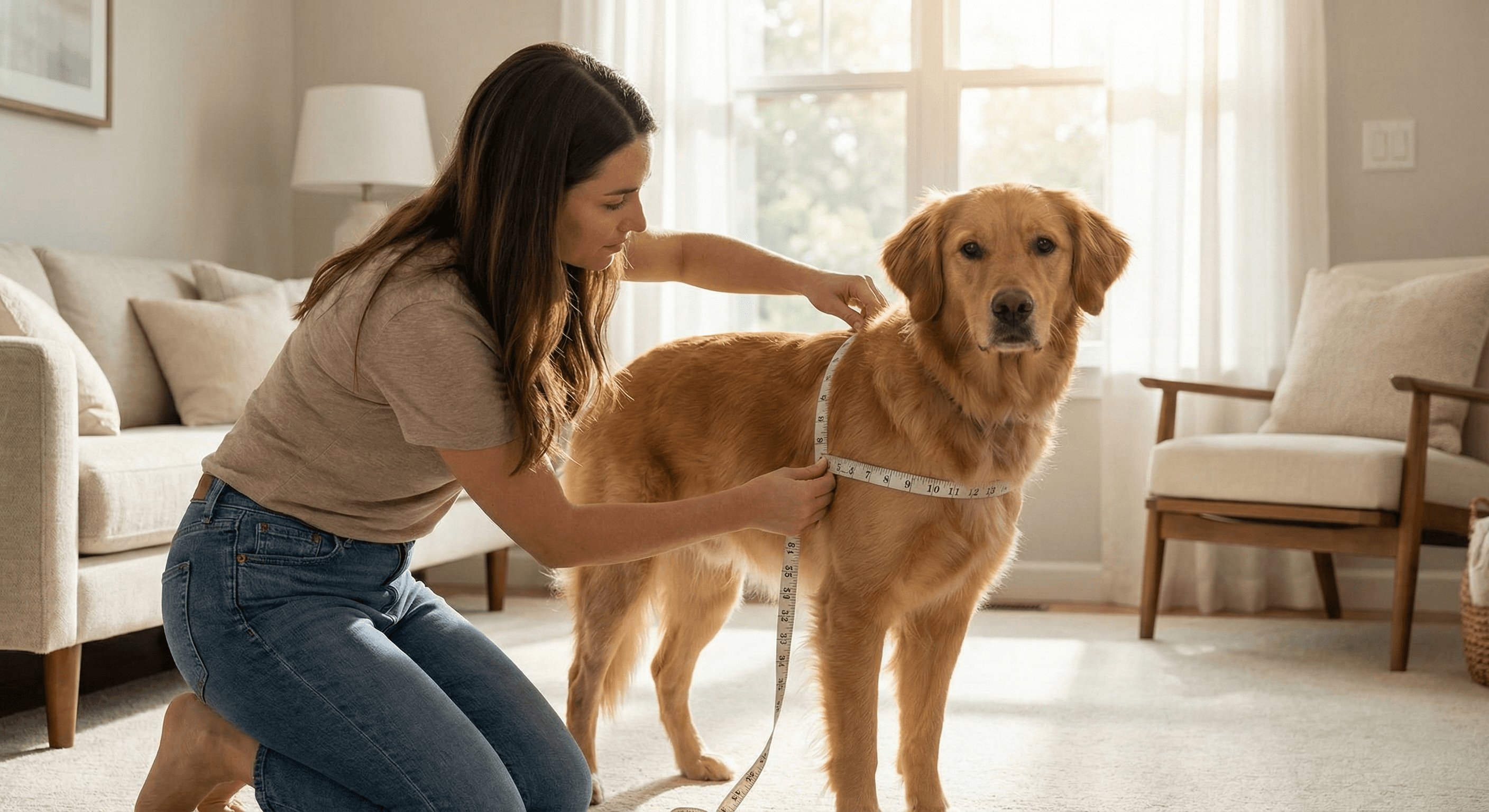
A harness only works if it fits. Too loose and your dog can back out of it near traffic. Too tight and it rubs, restricts movement and makes walks miserable.
Here's exactly how to measure a dog for a harness, how to read a size chart, and how tight a harness should be, step by step.
What You Need
- A soft tailor's measuring tape. No tape? Use a string or a phone charging cable, mark it with a pen, then measure it against a ruler or steel tape.
- Treats, to keep your dog standing still.
- A helper, if your dog is wriggly.
- 2 minutes.
Measure in centimetres. Most Indian size charts, including ours, list cm first.
How to Measure Dog Chest for a Harness
Chest girth decides harness size for almost every harness. Weight and breed are only rough guides.
- 1. Stand your dog on all four legs on a flat floor. Don't measure while your dog is sitting or lying down, because the chest changes shape.
- 2. Find the widest part of the ribcage. It's usually just behind the front legs, about a hand's width behind the armpits.
- 3. Wrap the tape all the way around the chest at that point. Keep it level, not slanting towards the neck.
- 4. Make it snug, not tight. The tape should lie flat against the body without squashing the fur.
- 5. Read the number in cm and write it down.
- 6. Measure again. If the two readings differ, use the larger one.
Fluffy breeds: for a Shih Tzu, Spitz, Husky or Golden Retriever, press the tape gently through the coat to the body. Measuring over loose fur can make the harness too big.
How to Measure Dog Neck for a Harness
- 1. Find the base of the neck, where the neck joins the shoulders. This is lower and wider than where a collar sits.
- 2. Wrap the tape around at that point, snug but flat.
- 3. Write down the number in cm.
The neck measurement matters for overhead and vest-style harnesses that go over the head, so the opening isn't too tight to put on or so loose that it slides down onto the shoulders.
Dog Harness Size Chart
All three wagNbush harnesses (tactical, no-pull and padded belt) use the same sizing.
| Size | Neck | Chest | Typical adult breeds |
|---|---|---|---|
| S | 30–48 cm (12–19 in) | 43–56 cm (17–22 in) | Shih Tzu, Pug, Lhasa Apso, small Indies, puppies of large breeds |
| M | 36–60 cm (14–24 in) | 56–69 cm (22–27 in) | Beagle, Cocker Spaniel, Spitz, most Indies |
| L | 42–72 cm (16–28 in) | 69–81 cm (27–32 in) | Labrador, Golden Retriever, Doberman, Boxer |
| XL | 50–84 cm (20–33 in) | 81–107 cm (32–42 in) | German Shepherd, Rottweiler, large Labradors |
Breed sizes are a rough guide. Dogs vary a lot within a breed, so always measure your own dog.
What If My Dog Is Between Two Sizes?
This happens often, especially at the edges (for example, a 56 cm chest is at the top of S and the bottom of M).
- Puppies and young dogs: choose the larger size and tighten the straps. They will grow into it.
- Adult dogs at the edge of a size: choose the larger size if your dog is fluffy or barrel-chested, and use the adjusters to get a snug fit.
- Slim, deep-chested dogs (Greyhound-type Indies, Dobermans) can slip out of a harness that's too big. Measure carefully and tighten every strap.
Breed Size Guide: Which Harness Size for My Dog?
Use this only as a starting point, then measure.
- Labrador harness size: most adult Labradors are L. Big males may need XL.
- German Shepherd harness size: most adults are L or XL. Measure, because males are often XL.
- Golden Retriever: usually L.
- Indie (Indian pariah dog): most adults are M or L. Females and lean dogs are often M.
- Beagle: usually M.
- Shih Tzu, Pug, Lhasa Apso: usually S. Pugs have broad chests, so check the chest number.
- Rottweiler: usually XL.
- Puppies of large breeds: often start in S, then move up quickly.
Adopting an Indie? Our Indie dog guide covers what to expect as they grow.
How Tight Should a Dog Harness Be?
A harness should be snug enough that your dog can't back out of it, and loose enough that it doesn't rub.
- Two-finger rule: slide two fingers flat between any strap and your dog's body. If you can't, it's too tight. If you can fit your whole hand, it's too loose.
- Chest strap position: it should sit a few fingers behind the front legs, not in the armpits.
- Front strap position: on a Y-shaped harness, the front should sit on the breastbone, not across the throat.
- Shoulders free: your dog should be able to walk, trot and sit without the straps pulling across the shoulders.
- Backing-out test: hold the leash gently and let your dog step back. If the harness slides forward over the head, tighten it.
How Should a Harness Fit a Dog? Signs It's Wrong
- Red marks, sores or hair loss under the front legs or on the chest
- Your dog scratching at it, freezing or refusing to walk
- The harness twisting or sliding to one side
- The neck opening sitting on the throat
- Your dog wriggling out easily
Check the armpits after the first few walks. Rubbing usually shows up there first.
Measuring a Puppy for a Harness
- Measure every 2–3 weeks while your puppy is growing fast, and recheck the fit every week.
- Choose a light, adjustable strap harness for young puppies. Heavy vest harnesses are for adult dogs.
- Get them used to it slowly. Put it on for a few minutes with treats, then remove it. Increase the time over a few days.
- Expect to buy more than one harness for large breeds in their first year.
Setting up for a new puppy? See our dog starter kit guide.
Common Measuring Mistakes
- Guessing from weight. Two 20 kg dogs can have very different chest sizes.
- Measuring where the collar sits instead of the base of the neck.
- Measuring a sitting dog.
- Pulling the tape tight "for control". A tight harness rubs and can make a dog more reactive.
- Measuring over thick fur without pressing the tape to the body.
- Using the size you bought last time. Dogs gain and lose weight, especially after neutering or during summer.
Measure Before You Order: Get the Size Right First Time
A two-minute measurement saves you from a return, a refund wait and a few more days with the wrong size. Measure the chest twice, check it against the chart, and if your dog is between sizes, pick the larger one.
All three come in S, M, L and XL (prices as listed on 17 October 2026):
- **Tactical Army Dog Harness with MOLLE System** (₹1,059–₹1,259): heavy-duty, metal hardware and a top handle, for strong pullers. Its structured vest needs an accurate chest size.
- **No-Pull Reflective Dog Harness with Front & Back Clip** (₹1,099–₹1,349): padded mesh with a front clip for dogs learning not to pull.
- **Adjustable Padded Dog Belt Harness** (₹375–₹479): light and adjustable, good for puppies and calm dogs.
Not sure which type? Read no-pull vs tactical harness, or see the best dog harness for strong breeds in India.
A Good Fit Is Half the Job
A well-fitted harness makes walks safer, but a dog that pulls still needs training. A few sessions with a dog trainer in Bangalore or a dog trainer in Delhi NCR can make a big difference.
Short on time for daily walks? Book dog walkers in Bangalore or dog walking in Delhi NCR.
Frequently Asked Questions
How do you measure a dog for a harness?
Measure the chest around the widest part of the ribcage, just behind the front legs, and the neck at its base where it meets the shoulders. Keep the tape snug but flat with your dog standing, then match the chest number to the size chart.
How do I measure my dog's chest for a harness?
Wrap a soft tape around the widest part of the ribcage, just behind the front legs, with your dog standing. Keep it level and snug, read it in cm, and measure twice.
How do I size a dog harness?
Go by chest girth first, then check the neck. If your dog is between two sizes, choose the larger size and adjust the straps.
How tight should a dog harness be?
You should be able to slide two fingers flat under every strap. Tighter than that will rub; looser and your dog may slip out.
How snug should a dog harness be?
Snug enough that it doesn't slide forward over the head when your dog backs up, but with two fingers of space under the straps. It shouldn't move around much when your dog walks.
Should I measure my dog over the fur?
Yes, but press the tape gently through thick fur to the body. Measuring over loose, fluffy fur can make you buy a size too big.
Is chest or neck measurement more important for a harness?
The chest. Harness sizes are mainly based on chest girth. Use the neck measurement as a second check.
What size harness does a Labrador need?
Most adult Labradors fit a Large (chest 69–81 cm). Big males may need XL. Always measure first.
What size harness for a German Shepherd?
Most adult German Shepherds fit L or XL (chest 69–107 cm). Males are often XL.
How often should I re-measure my puppy for a harness?
Every 2–3 weeks during fast growth, and check the fit every week. Adult dogs should be re-measured after any noticeable weight change.
Can I measure my dog without a measuring tape?
Yes. Wrap a string or cable around the chest, mark where it meets, then measure the string against a ruler.
Sources: Ruffwear sizing guide (measuring girth at the widest part of the ribcage); wagNbush product pages and harness size chart (prices checked 17 October 2026); general veterinary and trainer guidance on harness fit (two-finger rule).
Share this article
Book verified dog walkers near you
Compare prices, photos and profiles, then book on wagNbush.
Related articles
Delhi Air Pollution and Dogs: When to Walk and What to Watch For
What Delhi's winter smog does to dogs, the warning signs, how long to walk at each AQI level, which breeds are most at risk, and how to keep your dog busy indoors. Reviewed by a vet.
Read guideDog Parks in Noida: Sector 137 Timings & Rules
Noida's Sector 137 Dog Park timings, NAPR registration and pet rules (with fines), plus the parks where dog parents actually walk on a leash — and the places we don't recommend. Updated October 2026.
Read guideDog Parks in Bangalore: Cubbon Park Timings & Rules
Cubbon Park's Sunday dog area and rules, Domlur Dog Park, private off-leash parks in Whitefield and Bannerghatta Road, and leashed lake walks — with timings, fees and what to carry. Updated October 2026.
Read guide