
Tick & Flea Control for Dogs in India — Prevention, Tick Fever Signs & Safe Removal (2026)
Ticks and fleas are a year-round danger for dogs in India — and tick fever kills dogs every monsoon. This simple guide covers why India is such a hotspot, the warning signs to watch for, how to prevent ticks and fleas the right way, how to safely remove a tick, and how to protect even indoor dogs.
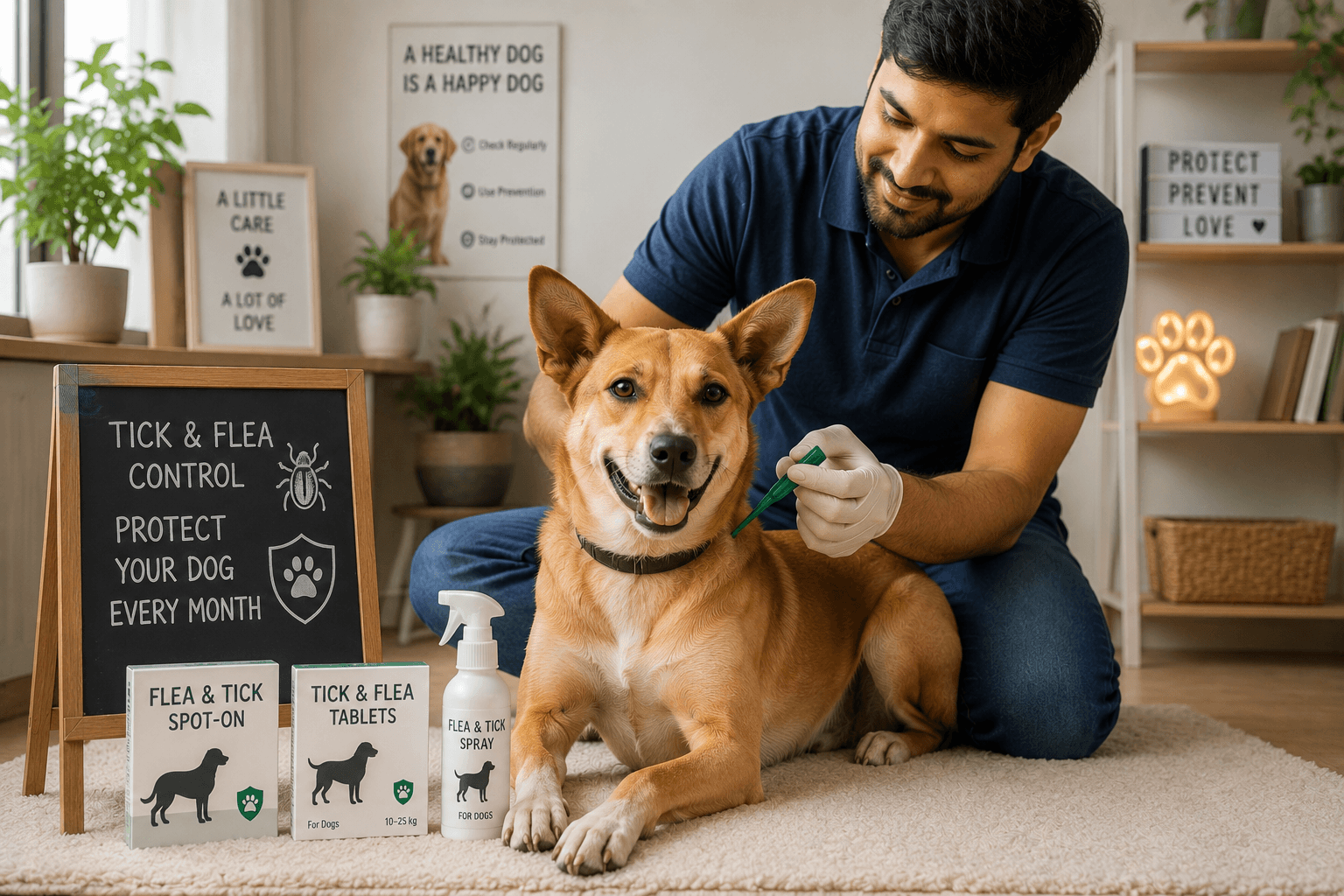
Tick & Flea Control for Dogs in India — Prevention, Tick Fever Signs & Safe Removal (2026)
Here's something scary that most pet parents learn the hard way.
A dog comes home from a normal walk with "just a few ticks." Nobody worries much. A week later, that same dog is running a fever, refusing food, and can barely stand. A blood test shows tick fever — a serious, sometimes deadly illness — from those "few ticks."
This happens in India far more often than it should, especially during and after the monsoon.
The good news? It's almost entirely preventable. Ticks and fleas are one of those problems where a little steady effort saves you a huge, frightening, expensive emergency down the line.
This guide keeps it simple: why India is such a hotspot, what these tiny pests can actually do, and exactly how to keep your dog protected all year.
Why India Is a Tick-and-Flea Paradise
It comes down to our weather.
Ticks and fleas love warm, humid conditions — which is most of India, most of the year. The monsoon makes it worse, causing a sharp spike in their numbers. And unlike some countries where these pests die off in winter, ours keep going almost year-round.
There's one more catch. The brown dog tick, the most common one in India, can survive *indoors* — hiding in carpets, furniture, and bedding. So this isn't just an outdoor, village-dog problem.
Even indoor apartment dogs are at risk. Ticks and fleas come in on your clothes, your shoes, your balcony, or another pet. A short walk on a patch of grass is all it takes.
They're Not Just Annoying — They're Dangerous
Yes, ticks and fleas cause itching and discomfort. But the real problem is what they can lead to.
Fleas can cause:
- Constant, miserable itching and scratching
- Skin allergies and infections (some dogs are allergic to flea bites)
- Hair loss and, in bad cases, anaemia from blood loss
- Tapeworms — dogs often get worms from swallowing fleas
*(This is exactly why flea control and deworming go hand in hand. See our dog deworming schedule guide.)*
Ticks are the bigger worry, because they can pass on tick fever — an umbrella term for a few serious blood infections (like babesiosis and ehrlichiosis). These attack your dog's red blood cells or platelets and can turn life-threatening within days.
And some of these pests can affect humans too. Keeping them off your dog protects your whole family.
Warning Signs You Should Never Ignore
Tick fever won't fix itself. Catching it early can save your dog's life, so watch for:
- A sudden fever or your dog feeling hot and unwell
- Low energy — sleeping more, skipping play, seeming "off"
- Loss of appetite
- Pale or yellowish gums (healthy gums are a salmon-pink colour)
- Weakness, wobbliness, or a swollen belly
- Any bleeding that seems unusual
If you see these — especially after your dog has had ticks — go to the vet the same day. Don't wait to "see if it gets better." With tick fever, time really matters.
How to Check Your Dog for Ticks
Make this a simple habit after every walk. It takes a minute.
- Run your fingers slowly through your dog's coat, feeling for small bumps.
- Check the favourite hiding spots: behind the ears, between the toes, around the neck and collar, and near the tail.
- Long-haired and fluffy dogs need extra attention — ticks hide easily in thick coats.
- Glance at the gums now and then. Pink is good.
The quicker you spot a tick, the less chance it has to cause harm.
How to Actually Prevent Ticks and Fleas
This is the heart of it. Here's the honest truth: no single product does everything, and the cheap options do the least. Real protection is a few things working together, chosen with your vet.
Here are the main options, from strongest to weakest:
Spot-on treatments. A liquid you apply on the skin between the shoulder blades, usually once a month. Fast-acting, effective, and very popular in India. Keep your dog dry for about 48 hours after applying.
Oral chewable tablets. Given by mouth, monthly or even every three months depending on the product. They work from inside the bloodstream, so bathing and swimming don't wash them off. These need a vet's advice — especially for puppies, and for certain breeds or dogs with a history of seizures.
Tick collars. Good long-lasting protection (a few months) for dogs that spend lots of time outdoors. They have to sit snug enough to touch the skin to work.
Shampoos, powders, and sprays. These can kill pests already on your dog and give short-term relief, but they don't prevent new ones for long. Think of them as backup, not your main plan.
Three rules that matter more than the product you pick:
1. Let your vet choose. The right product depends on your dog's age, weight, health, and lifestyle. This is a "ask the vet, don't guess" situation.2. Be consistent. A single missed month during peak season is often exactly when tick fever sneaks in. Set a reminder.3. Keep it up all year, not just in the monsoon. And yes — indoor dogs too.
Don't Forget Your Home
Here's the part people miss: ticks and fleas don't just live on your dog. They live in your dog's surroundings — and for every pest on your dog, many more may be in your home.
So treat the environment too:
- Wash your dog's bedding in hot water, regularly.
- Vacuum carpets, sofas, and the cracks and corners where pests hide. Empty the vacuum outside.
- Keep your dog's area clean and dry — these pests love damp spots.
- Treat all your pets together. Protecting one dog while another is untreated just keeps the cycle going.
If you have a heavy infestation in the house, ask your vet about safe ways to treat your home environment.
How to Safely Remove a Tick
If you find one, stay calm and remove it properly:
- Use fine-tipped tweezers, not your fingers.
- Grip the tick as close to your dog's skin as possible.
- Pull straight out, slow and steady. Don't twist, jerk, or squeeze the body.
- Clean the spot afterwards.
Skip the old myths — no burning matchsticks, no nail polish, no oil. Those don't work and can make things worse. If you can't get the whole tick out, or you're not sure, let your vet handle it.
A Few Special Notes
- Puppies can usually start prevention from around 6–8 weeks, but only with a puppy-safe product at the right dose — vet-guided.
- Never use a dog product on a cat. Some dog ingredients are toxic to cats.
- Pregnant or nursing dogs need vet-approved products only.
- If your dog recovers from tick fever, stay extra watchful — past infection doesn't make them immune, and vets often suggest follow-up blood tests.
How wagNbush Helps
Staying ahead of ticks and fleas is easier with the right support in your corner.
With wagNbush, you can:
- Find trusted vets to set up the right prevention plan for your dog
- Book grooming that includes tick-and-flea checks and baths
- Keep your dog's whole health routine — prevention, deworming, checkups — in one place
👉 Explore pet services in Bengaluru
👉 Explore pet services in Delhi NCR
Frequently Asked Questions
How often should I use tick and flea prevention in India?
All year round, not just during the monsoon. Ticks and fleas stay active across most of the year here, and even indoor dogs need protection. Follow the schedule your vet sets.
Do indoor dogs really need tick and flea protection?
Yes. The common brown dog tick survives indoors in carpets, bedding, and furniture, and pests hitch rides in on shoes, clothes, and other pets. Indoor dogs are still at risk.
What are the signs of tick fever in dogs?
Fever, tiredness, loss of appetite, pale or yellowish gums, weakness, and sometimes a swollen belly — often after tick exposure. It's a same-day vet visit, not a wait-and-watch situation.
Which is better — spot-on or tablets?
Both work well. Tablets aren't washed off by baths or swimming; spot-ons are easy and affordable. The best choice depends on your dog, so ask your vet.
Do flea and tick shampoos alone work?
Not for prevention. Shampoos and powders help with pests already on your dog but don't stop new ones for long. Use them alongside a proper preventive, not instead of one.
How do I safely remove a tick?
Use fine-tipped tweezers, grip close to the skin, and pull straight out slowly without twisting. Clean the area after. Never use fingers, heat, or oil.
Final Thought
Ticks and fleas are tiny, but the trouble they cause is not. In India's climate, they're a year-round reality — and tick fever is a genuine danger every single monsoon.
The fix isn't complicated, though. A vet-approved prevention plan, a quick tick-check after walks, a clean home, and a little consistency. That's really all it takes.
A few minutes of prevention today can save your dog from a frightening illness tomorrow. That's a trade worth making, every time.
This guide is for general awareness and isn't a substitute for veterinary advice. Always check with your vet for the right tick and flea product, dose, and schedule for your dog.
Share this article
Ready to Find Pet Services Near You?
Browse verified pet service providers in your city and book instantly on wagNbush.