
Indian Pariah Dog (Indie): Temperament, Price & Adoption
Everything about the Indie — India's native dog, also called the Indian Pariah or desi dog: temperament, size, lifespan, price, Indie puppies and mixes, apartment life, and how to adopt one in Bengaluru or Delhi NCR.
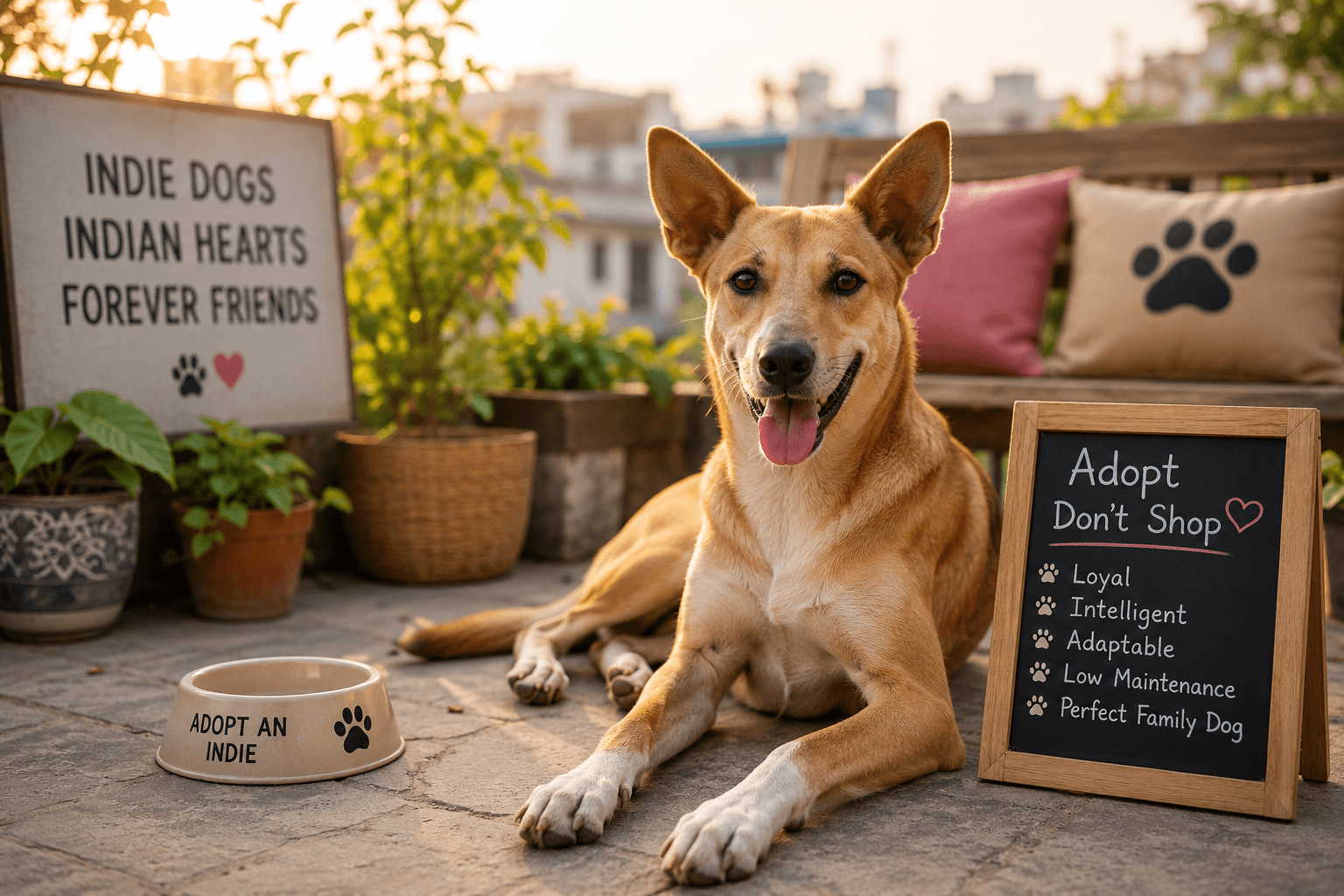
By the wagNbush Team · Last updated: 16 October 2026 · 10 min read
You've seen them your whole life — the alert, golden-brown dog outside the tea stall, the one trotting down your lane like they own it, the pup with the curled tail and sharp, watchful eyes.
That's the Indian Pariah dog, better known as the Indie. It isn't "just a street dog". It's one of the oldest types of dog in the world, native to India, and for most Indian homes it's one of the healthiest, smartest and easiest dogs you can bring home.
This guide covers what an Indie is, their temperament, size and lifespan, what an Indie costs, Indie puppies and Indie mixes, and exactly how to adopt one.
Quick answer:
- What is an Indie? India's native dog — also called the Indian Pariah dog, desi dog or INDog — shaped by nature over thousands of years rather than by breeders.
- Temperament: loyal, alert, intelligent and a little independent. Wary of strangers until they trust you.
- Size: medium — roughly 45–64 cm (18–25 in) tall and 15–30 kg.
- Lifespan: typically 13–16 years.
- Price: usually free to adopt, or a small adoption fee.
- Good for apartments? Yes, with daily walks and play.
What Is an Indie Dog? (Indie Dog Meaning)
An Indie is India's native dog. You'll hear them called by several names:
- Indie — short for "Indian", and the most common name today
- Desi dog — the everyday Hindi term
- INDog — short for Indian Native Dog
- Indian Pariah dog — the older name. Many people now prefer "Indie" because "pariah" comes from a caste-based term.
Indies are a landrace, not a breed created by people. Most breeds were made by humans selecting for certain looks over a few hundred years. Indies weren't. Native dogs like them have lived alongside people in the Indian subcontinent for thousands of years, shaped by the climate, the streets and the villages. That's why they're so healthy, so adaptable and so well suited to India.
One honest note: not every street dog is a "pure" Indie — many are mixes. If you're adopting a family pet, that doesn't matter at all.
What Does an Indie Look Like?
- Build: medium, lean and athletic
- Height: roughly 45–64 cm (18–25 in) at the shoulder
- Weight: roughly 15–30 kg — females are usually smaller and lighter
- Ears: upright and pointed
- Face: wedge-shaped, with alert, almond-shaped eyes
- Tail: curved, often carried over the back
- Coat: short and smooth
Colours: brown and fawn are the most common — the classic "brown Indie dog" — but Indies also come in tan, black, white, and combinations with white markings.
Indie Dog Temperament: What Are They Like to Live With?
Once an Indie bonds with you, they're loyal and deeply affectionate. Many Indie parents say their dog just seems to understand them.
- Loyal and protective. Natural watchdogs — they'll bark to alert you to strangers or anything unusual.
- Alert and observant. Not much gets past them.
- Intelligent and quick to learn. Generations of survival have made them sharp problem-solvers.
- A little independent. They don't need you hovering, which suits families who are out at work during the day.
- Wary of strangers at first. They warm up once they trust someone, and they take cues from you.
Are Indian Pariah dogs good pets?
Yes. They're one of the best choices for Indian homes — healthy, long-lived, low-maintenance and built for Indian weather. The one thing to plan for is early socialisation, because their natural alertness can turn into territorial behaviour if they don't meet enough people and dogs while young.
Are Indies aggressive?
Not by nature. They're protective and can be suspicious of strangers, but a well-socialised Indie with gentle, consistent training is a calm, friendly family dog.
Why Indies Are So Special
- Healthy. Without generations of selective breeding, Indies have few of the inherited problems common in many popular breeds. That usually means fewer vet bills.
- Long-lived. Indies typically live 13–16 years.
- Built for Indian weather. They handle heat and humidity far better than heavy-coated imported breeds like Huskies or Saint Bernards.
- Low-maintenance. A short coat that needs little grooming and has little "doggy" smell.
- Smart. Quick to learn, quick to read your mood.
Are Indies Good for Apartments?
Yes. Indies adapt well to flats in Bengaluru, Noida, Delhi or any Indian city. What they need isn't space — it's activity:
- One or two good walks a day — see our guides to dog-friendly parks in Bengaluru and Noida
- Playtime and sniffing time
- Something to think about — a puzzle toy, a training game, hide-the-treat
A bored Indie will invent their own fun, usually involving your slippers. A tired Indie is a calm Indie.
Worried about your housing society? RWAs cannot ban pets — see your rights as a pet parent. Comparing breeds for a flat? Read the best dog breeds for Indian apartments.
Indie Dog Price: What Does an Indie Cost?
Buying price: usually nothing. Indies are adopted, not bought. Shelters and rescue groups usually charge nothing or a small adoption fee, which often helps cover vaccination and sterilisation.
Be careful of anyone selling "Indian Pariah puppies". Ethical sellers don't sell Indies — there are thousands waiting for homes. Paying for an Indie puppy usually means supporting someone breeding street dogs for profit.
Ongoing costs are low. Because Indies are healthy, low-grooming dogs, they're among the cheapest dogs to keep. Your main costs are good food, vaccinations, deworming, tick and flea control, and an annual check-up. For a full monthly budget, see the cost of owning a dog in India. To compare with other breeds, see our breed-wise dog price list.
Indie Puppies: What to Expect
Indie puppies are playful, curious and fast learners — and they grow quickly.
- Vaccinations: start the puppy vaccination course as soon as you adopt, including rabies, and keep the vaccination card safe. Wait until the course is complete before visiting dog parks.
- Deworming: puppies need regular deworming — follow our deworming schedule for India.
- Socialisation: introduce your puppy to lots of friendly people, vaccinated dogs, sounds and places in the first few months. This is the most important thing you can do for a confident adult Indie.
- Chewing: give them chew toys, or they'll pick your furniture.
- Sterilisation: talk to your vet about the right age.
Getting ready for a new puppy? Read our first-time dog owner's guide and get the basics in our First-Time Dog Starter Kit.
Indie Mix Dogs
Many dogs you'll meet at shelters are Indie mixes — for example, an Indie crossed with a Labrador, a Golden Retriever or a German Shepherd. They often combine the Indie's toughness with features of the other breed, such as a longer coat, a bigger frame or floppy ears.
Indie mixes can make wonderful pets. Their size, coat and energy are harder to predict, so meet the dog first, ask the shelter about their personality, and expect a mix to need a little more grooming if they've inherited a longer coat.
Caring for an Indie
- Grooming: a quick brush once a week and an occasional bath.
- Food: good-quality dog food, or simple home-cooked meals such as rice with boiled chicken or fish and vegetables. Indies are expert beggars — don't overfeed them. And know which foods are poisonous to dogs — many are common in Indian kitchens.
- Health: vaccinations, regular deworming, and tick and flea control, especially during the monsoon. An annual vet check keeps them in shape.
- Exercise: daily walks, play, and some brain work. A comfortable harness helps if your Indie pulls — see our harness guide.
Training Your Indie
Indies are smart and learn quickly, which makes training enjoyable.
- Use positive methods. Treats, praise and patience work far better than harshness.
- Socialise early and often. It's the single biggest factor in a calm, confident adult Indie.
- Practise recall. Coming back when called keeps an independent, curious dog safe.
- Keep sessions short — 5 to 10 minutes, a few times a day.
If you'd like help, find a dog trainer in Bengaluru or Delhi NCR.
How to Adopt an Indie
You can adopt an Indie through:
- Animal shelters and NGOs — most have healthy Indies and Indie puppies waiting for homes, often already vaccinated and sterilised. In Bengaluru, organisations such as CUPA and Charlie's Animal Rescue Centre (CARE) run adoptions. In Delhi NCR, organisations such as Friendicoes do the same. Check their websites or social media for current adoption drives.
- Rescue and foster networks — active on Instagram and Facebook in most cities, with regular adoption camps.
- A street dog you already know — if a friendly dog from your area has chosen you, you can adopt them. Get a full vet check, vaccinations (including rabies), deworming and tick treatment first.
What the adoption process usually looks like:
- Fill in an adoption form and share basic details about your home and family.
- Meet the dog — ideally more than once, with everyone who lives with you.
- Some shelters do a home check or a follow-up visit.
- Sign the adoption agreement and collect the vaccination record.
Most shelters want to know the dog is going to a permanent home, so expect a few questions — that's a good sign.
Adopt, Don't Shop
India has millions of community dogs, and most of them are Indies. When you adopt one, you give a deserving dog a home, help reduce the number of dogs on the street in a humane way, and push back against the old idea that imported breeds are "better". They aren't. For Indian homes and Indian weather, the Indie is often the smarter choice.
How wagNbush Helps
Once your Indie is home, wagNbush helps with everything that comes next — from verified providers near you:
- Daily walks: dog walkers in Bengaluru and Delhi NCR
- Training: dog trainers in Bengaluru and Delhi NCR
- Boarding, sitting and grooming when you need them
Why daily walks matter so much for an active breed like the Indie: Dog walking isn't optional.
Frequently Asked Questions
What is an Indie dog?
An Indie is India's native dog, also called the Indian Pariah dog, desi dog or INDog. It's a landrace shaped by nature over thousands of years, not a breed created by breeders.
Are Indian Pariah dogs good pets?
Yes. They're loyal, intelligent, healthy and long-lived, need little grooming, and are well suited to Indian weather. Early socialisation helps them grow into calm, friendly adults.
What is the price of an Indie dog in India?
Indies are usually free to adopt, or cost a small adoption fee that helps cover vaccination and sterilisation. Be wary of anyone selling Indie puppies.
How long do Indian Pariah dogs live?
Typically 13–16 years, and sometimes longer with good care.
How big do Indie dogs get?
Medium-sized: roughly 45–64 cm (18–25 in) tall and 15–30 kg. Females are usually smaller than males.
Are Indies good for apartments?
Yes, as long as they get one or two good walks a day, playtime and some mental exercise.
Are Indie dogs aggressive?
Not by nature. They're alert and protective and can be wary of strangers, but a well-socialised, gently trained Indie is a calm family dog.
What is an Indie mix?
A dog that's part Indie and part another breed, such as a Labrador or Golden Retriever. Indie mixes often make excellent pets, though their size and coat are harder to predict.
Do Indies need vaccinations?
Yes. Indies are hardy, but they still need a full vaccination course (including rabies), regular deworming, and tick and flea control.
Where can I adopt an Indie?
From animal shelters, NGOs, and rescue and foster networks in your city, or by adopting a friendly street dog after a full vet check and vaccinations.
Final Thought
The Indie proves you don't need a pedigree or a price tag to find an extraordinary dog. If you're thinking about getting a dog, visit a shelter before you open a breeder's website. Meet an Indie. You might find the best dog in India was right here all along.
Sources: INDog Project (indog.co.in); breed profiles from Dogster and Earthpedia; Language Log on the origin of the word "pariah". Last updated 16 October 2026.
Share this article
Ready to Find Pet Services Near You?
Browse verified pet service providers in your city and book instantly on wagNbush.